
Base Set is where the money in Pokémon lives. Sixteen of its 102 cards are Rare Holos, and those sixteen carry almost all of the set value. Everything below ranks them by what a 1st Edition copy actually changes hands for in PSA 10, with the reason each card sits where it does. Prices move, so treat the figures as tiers rather than quotes, and check a live comp before you buy or sell.

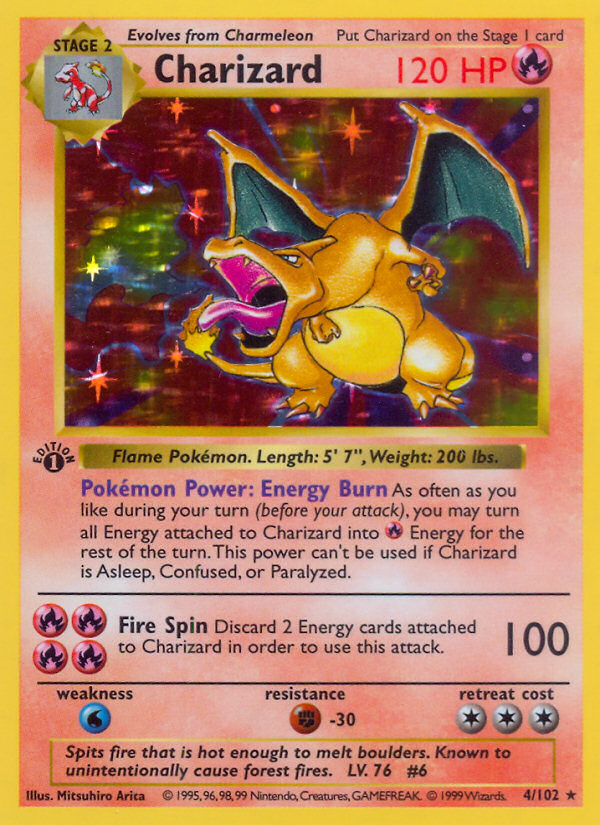
Nothing else is close. Base Set Charizard is the most recognized trading card outside of sports, and the 1st Edition holo in PSA 10 has traded into the six figures at the top of the market. The reasons stack: Mitsuhiro Arita drew the fire pose to wrap the holo window, Charizard anchored the first cartoon arc and the first movie, and the 1st Edition PSA 10 population sits under 130 worldwide against thousands of PSA 9s. That population gap, not the artwork alone, produces the widest grade-to-grade price spread in the hobby. If you are buying, confirm the Edition 1 stamp under the art first, then read the holo surface at an angle for the hairlines that drop a 10 to a 9.
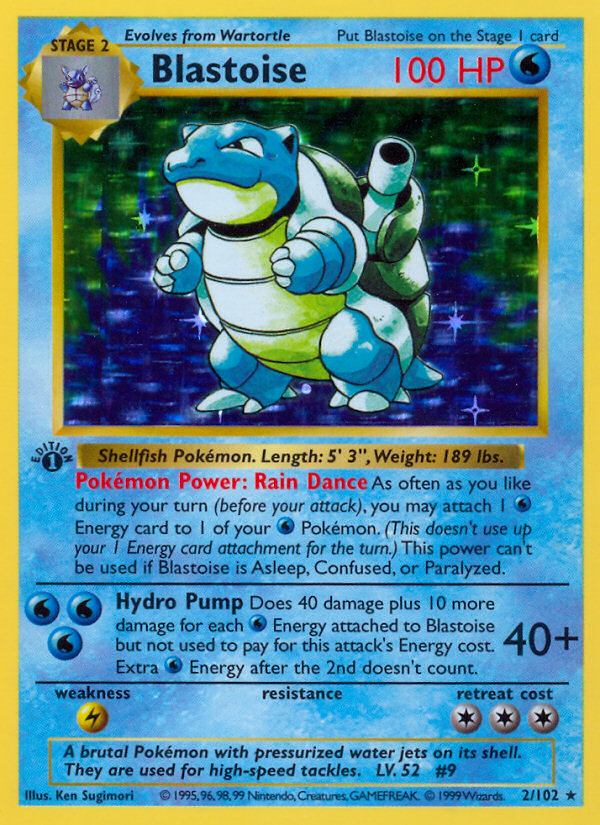
The water starter tracks right behind Charizard in collector pull and well behind it in price, which is the pattern for every card on this list. Ken Sugimori art, the same Stage 2 holo layout, and a 1st Edition PSA 10 that has cleared the mid five figures. Centering on the right border is where most pack-fresh copies lose the 10, because the holo registration ran inconsistent on that edge. One thing to keep straight: a separate Galaxy Star presentation Blastoise exists and has sold for hundreds of thousands, but it is a different object from the card in booster packs, and the two get blurred together in headlines.
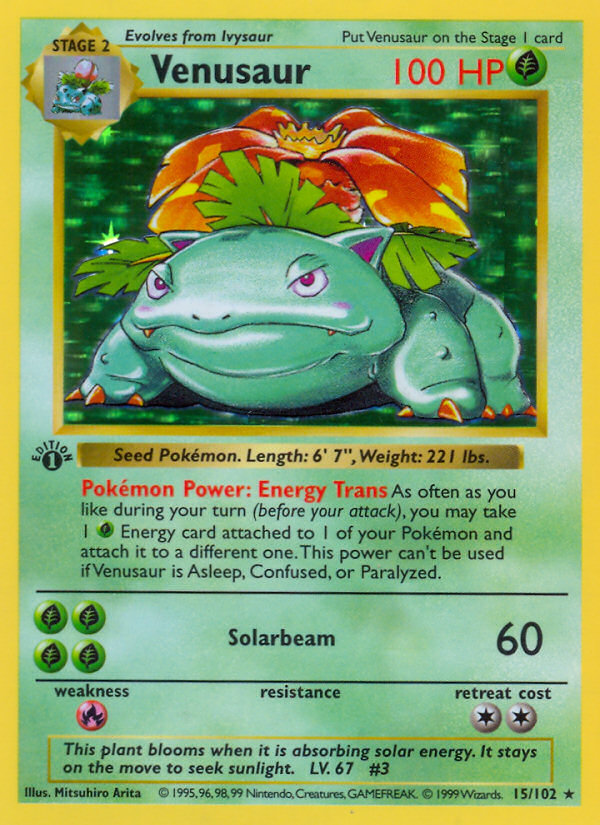
The quietest of the three starters, and the most interesting bet because of it. Venusaur holo window is more contained than Charizard or Blastoise, so the print shows less of the centering chaos that punishes the other two, and PSA 10 pop reports run a little higher. Demand has lagged for years, which is why many collectors see Venusaur as the catch-up trade of the trio. Whether the starter gap actually closes is the open question, and the case rests on Venusaur having the most room left to run.
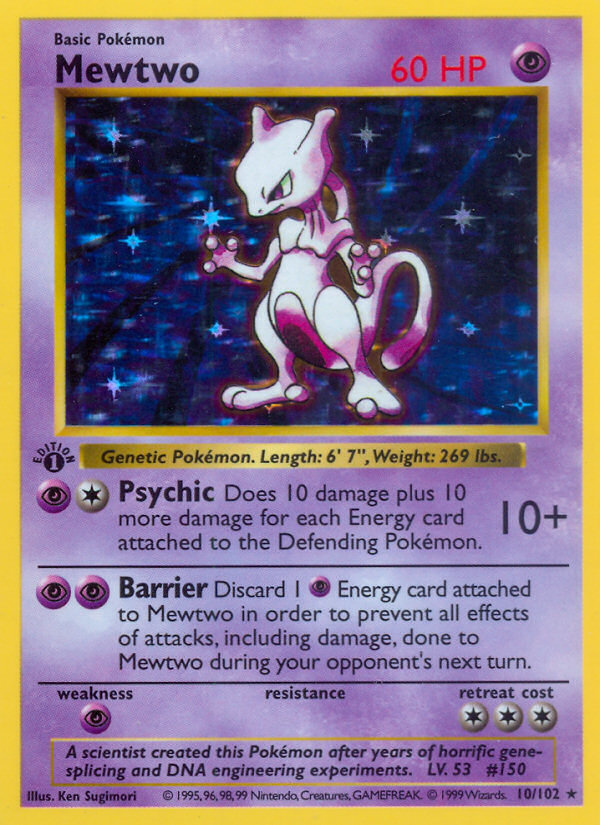
The cheapest of the marquee holos and the one most experienced collectors recommend first. Mewtwo became the visual shorthand for the first movie, which keeps demand broad, but it was also widely played, so the PSA 9 and 10 populations are healthier than the starters. That keeps the price reasonable and the 9-to-10 jump less brutal than on Charizard. The holo surface scratches easily, so tilt any raw copy under light across the window before you commit.
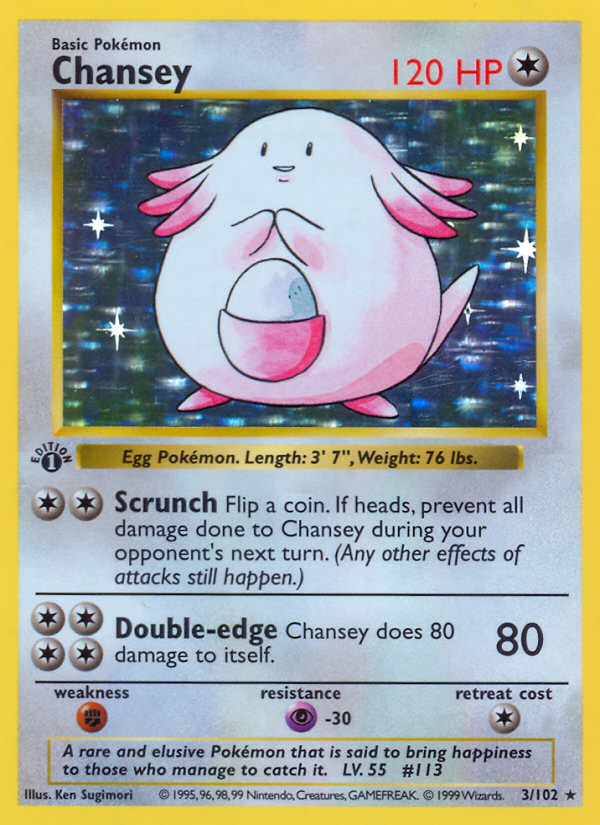
A sleeper that serious set-builders respect. The pink holo is one of the harder Base Set surfaces to find clean, and Chansey was never a tournament staple, so fewer high-grade copies were preserved by accident. The 1st Edition PSA 10 trades in the mid four figures with a pop report that stays tight. For a collector who wants a genuinely scarce Base Set 10 without paying starter money, Chansey belongs on the short list.
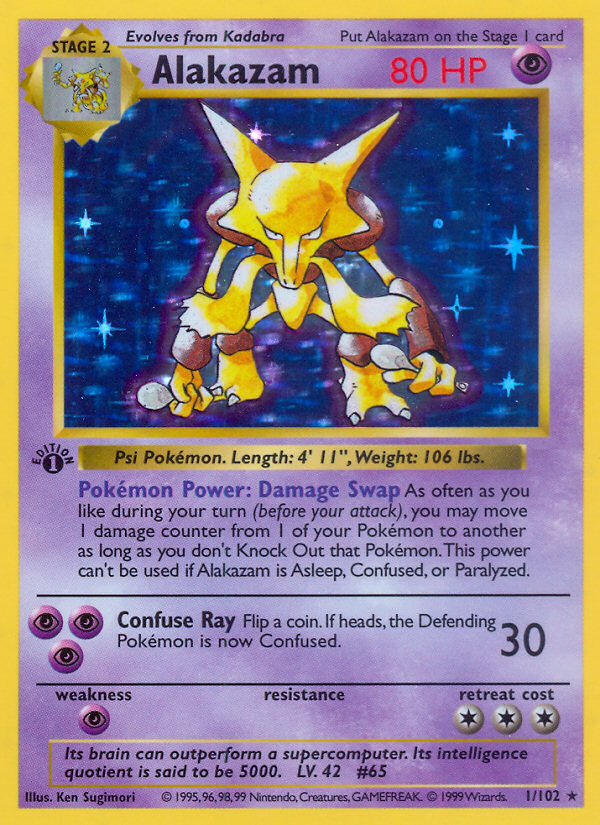
Card number one in the set, which earns it a completist premium beyond its playability. Alakazam was a competitive card in 1999, so a high share of the print run saw real table time and few survived pack-fresh. The 1st Edition holo in PSA 10 trades in the low-to-mid four figures. As the literal first card in the binder, it carries a small ordering premium that the rest of the mid tier does not.
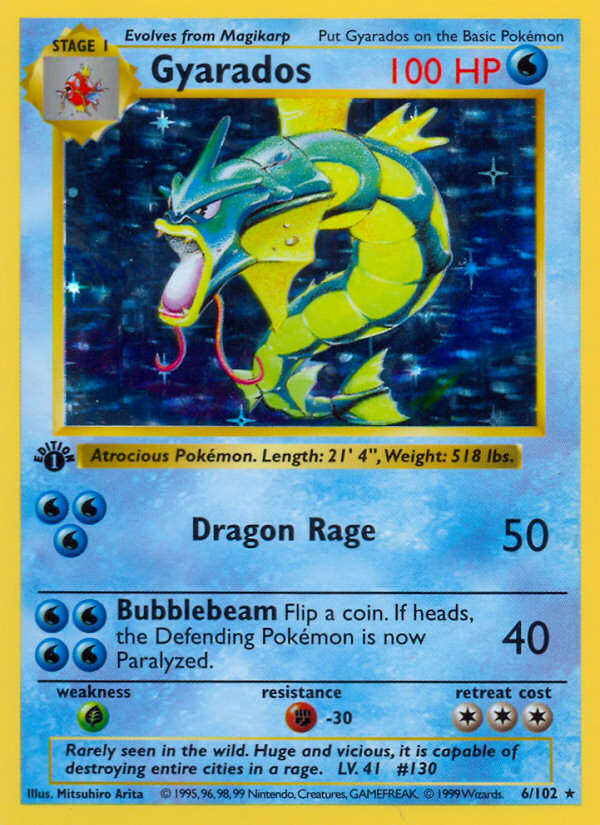
One of the most striking holos in the set and a steady mid-tier performer. Gyarados carries cross-generation appeal that not every Base Set holo shares, which gives it a slightly firmer floor. The art reads beautifully through the cosmos holo, and clean copies are scarcer than the print run suggests because the dark blue body shows surface wear under raking light. A reliable hold rather than a moonshot.
The rest of the sixteen
Zapdos, Hitmonchan, Clefairy, Nidoking, Ninetales, Poliwrath, Raichu, Magneton, and Machamp round out the holo run. None of these are moonshots, but each is a real vintage PSA 10 holo with a tight population, and several trade for less than collectors assume. Hitmonchan was a defining tournament card and saw heavy play, so high grades are scarcer than the price implies. Machamp is the outlier of the group: it shipped as a guaranteed 1st Edition pull in every 2-Player Starter Set, which flooded supply and keeps even pristine 1st Edition copies affordable. If you want to own a piece of Base Set in the top grade without a four-figure outlay, this tier is where to start.
How these prices actually get set
Three forces set every number on this list. Population is the first: PSA publishes a public report for each card, and the ratio of PSA 10s to PSA 9s predicts the grade-to-grade price gap better than anything else. Demand is the second, and it splits between the narrow collector market and the broad cultural one. Charizard pulls from both; the mid-tier holos pull mostly from collectors. Condition rarity is the third: Base Set used a soft cardstock that picks up edge whitening and holo scratches, so PSA 10 survival is low even for cards with large print runs. A card can be common in raw form and still have a tiny PSA 10 population, and that gap is exactly where the value sits.
If you are buying
Work in one order every time: variant, then grade, then comp. Confirm the print first, because a 1st Edition and an Unlimited of the same card are different markets. Inspect or demand photos of the holo surface and all four corners next, since condition is where most of the value lives on these cards. Then price against recent sales for that exact variant and grade rather than a blended average, because a single old sale or a single hyped one can drag a market price away from where the card actually trades. For anything above a few hundred dollars raw, insist on angled-light photos of the holo before you send money.
Common questions
- What is the most valuable Base Set card?
- Base Set Charizard, card 4 of 102. The 1st Edition holo in PSA 10 has sold into the six figures, far above any other card in the set. Shadowless and Unlimited Charizards are worth less but still lead their own print runs.
- Are Shadowless cards worth more than 1st Edition?
- No. For the same card, 1st Edition is the most valuable print, Shadowless sits below it, and Unlimited is the most affordable. Shadowless is scarcer than Unlimited but was produced in larger numbers than 1st Edition.
- How do I know if my Base Set card is valuable?
- Run three checks. Is it a Rare Holo, meaning one of the sixteen cards on this list? Which print variant is it, which you confirm with the Edition 1 stamp and the drop-shadow test? And what condition is it in? A common in played shape is worth cents; a 1st Edition holo in gem-mint condition is worth thousands.
- Are Base Set cards a good investment?
- The top of Base Set has produced real long-term returns, but most of the set has not. Value concentrates in the sixteen holos, in 1st Edition and Shadowless prints, and in high grades. Buy for a 10-year horizon, budget for grading and storage, and do not size a position you could not hold through a 40 percent drawdown.
- Should I grade my Base Set card?
- Only if it is a holo or a clean 1st Edition, and only after you have inspected it honestly against PSA standards. Submitting a card that comes back a 7 or 8 on a low-value card loses money once you count the fee. Pre-grade it before you pay.
- 1st Edition vs Shadowless vs UnlimitedThe 30-second variant check that decides which market your card is in.
- A timeline of how Base Set got printedWhy the three print waves exist and what separates them.
- How Pokémon card grading actually worksThe four criteria that decide whether your holo is a 9 or a 10.
- How to read PSA 10 population reportsThe free tool that explains every price on this list.
- Every card in Base SetBrowse all 102 cards with prices and variants.