
The stamp
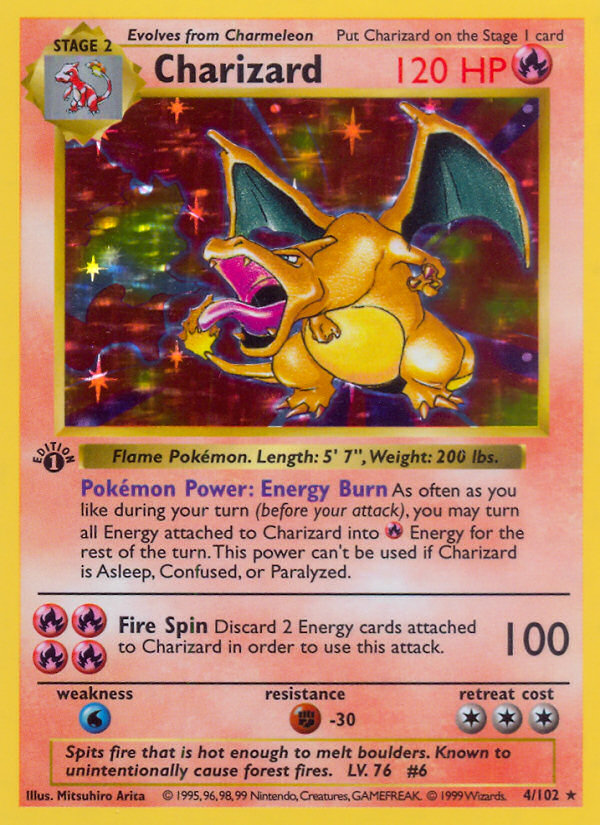
The 1st Edition stamp is a small black mark reading Edition 1 inside a circular outline, printed just below the lower left of the central artwork. If it is there, the card is 1st Edition. If it is absent, the card is either Shadowless, which also lacks the drop shadow on the right of the frame, or Unlimited, which has the drop shadow. The stamp is the single most valuable detail to confirm on any Base Set card.
Why the print is so scarce
The 1st Edition print ran from the January 9, 1999 release through roughly early March of that year, a window of about two months, before Wizards moved to the Shadowless and then the Unlimited print. Wizards never disclosed the print numbers, so population reports from the grading services are the only public proxy. Those reports show a fraction of the supply of the later prints, which is the entire reason for the premium.
The premium across the set
For most Base Set holos, the 1st Edition in top grade is worth a large multiple of the Unlimited print. Charizard is the extreme case, with a 1st Edition PSA 10 in the six figures against an Unlimited in the mid four figures. The non-holo cards carry a smaller but real 1st Edition premium, and even commons in a true PSA 10 trade for far more in 1st Edition than Unlimited.

Other 1st Edition details
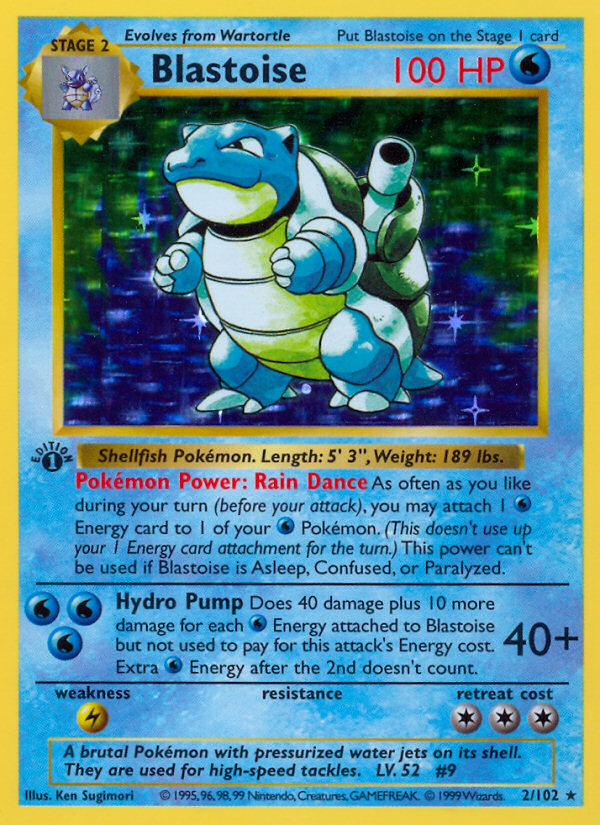
The 1st Edition print used a slightly off-gray cardback compared with later prints, and the holo printing is fractionally less saturated. These are subtle differences that experienced collectors can spot but are not used as primary authentication. A small number of 1st Edition cards also show sharper, square-cut corners from a different cutting process, which carry a premium when graded and confirmed factory-cut.
Buying 1st Edition
Always confirm the stamp yourself rather than trusting a listing title, because mistaking a Shadowless or Unlimited copy for a 1st Edition is the most common and most expensive Base Set error. For graded cards, verify the certification number on the grading company database. For raw cards, demand a clear photo of the stamp area plus the right edge of the frame so you can rule out Shadowless and Unlimited at once.
Common questions
- How do I tell if a Base Set card is 1st Edition?
- Look for a small Edition 1 stamp inside a circle, just below the lower left of the artwork. If it is present, the card is 1st Edition. If it is absent, the card is Shadowless or Unlimited.
- Why is Base Set 1st Edition so valuable?
- The 1st Edition print ran for only about two months in early 1999 before Wizards moved to later prints. That short window produced a small fraction of the total supply, which makes 1st Edition cards worth a large multiple of the later prints in high grade.
- Do all Base Set cards have a 1st Edition?
- Yes, the entire Base Set was printed in a 1st Edition run, from the holos down to the commons and energy cards. The basic Energy cards, however, skipped the Shadowless transitional print and went straight from 1st Edition to Unlimited.